Tuesday, July 31, 2018

Diplomat Pharmacy (DPLO) Shares Down 10.4%

Shares of Diplomat Pharmacy Inc (NYSE:DPLO) dropped 10.4% during mid-day trading on Friday . The company traded as low as $22.21 and last traded at $22.33. Approximately 3,371,300 shares traded hands during mid-day trading, an increase of 267% from the average daily volume of 918,233 shares. The stock had previously closed at $24.93.

DPLO has been the subject of a number of recent analyst reports. Zacks Investment Research cut Diplomat Pharmacy from a “hold” rating to a “sell” rating in a research report on Tuesday, May 1st. ValuEngine cut Diplomat Pharmacy from a “buy” rating to a “hold” rating in a research report on Monday, July 2nd. Morgan Stanley raised their price objective on Diplomat Pharmacy from $16.00 to $21.00 and gave the company an “equal weight” rating in a research report on Tuesday, July 3rd. Leerink Swann reaffirmed an “outperform” rating and issued a $33.00 price objective on shares of Diplomat Pharmacy in a research report on Friday, June 22nd. Finally, JPMorgan Chase & Co. raised Diplomat Pharmacy from a “neutral” rating to an “overweight” rating in a research report on Thursday, May 10th. Eight investment analysts have rated the stock with a hold rating and six have given a buy rating to the company. The stock has an average rating of “Hold” and an average target price of $26.64.

Get Diplomat Pharmacy alerts:

The firm has a market capitalization of $1.66 billion, a price-to-earnings ratio of 25.38 and a beta of 1.33. The company has a quick ratio of 0.57, a current ratio of 0.88 and a debt-to-equity ratio of 0.59.

Diplomat Pharmacy (NYSE:DPLO) last released its quarterly earnings results on Monday, May 7th. The company reported $0.20 earnings per share for the quarter, missing the Thomson Reuters’ consensus estimate of $0.21 by ($0.01). The firm had revenue of $1.34 billion for the quarter, compared to analyst estimates of $1.28 billion. Diplomat Pharmacy had a return on equity of 8.80% and a net margin of 0.23%. The business’s revenue for the quarter was up 24.4% on a year-over-year basis. During the same period in the previous year, the business posted $0.19 earnings per share. equities research analysts anticipate that Diplomat Pharmacy Inc will post 0.92 EPS for the current year.

In related news, Director Shawn Tomasello sold 1,680 shares of Diplomat Pharmacy stock in a transaction that occurred on Tuesday, June 5th. The stock was sold at an average price of $24.27, for a total transaction of $40,773.60. Following the completion of the sale, the director now directly owns 12,816 shares of the company’s stock, valued at approximately $311,044.32. The transaction was disclosed in a legal filing with the SEC, which is accessible through the SEC website. Also, Director Jeffrey G. Park sold 1,695 shares of Diplomat Pharmacy stock in a transaction that occurred on Monday, June 11th. The stock was sold at an average price of $25.26, for a total value of $42,815.70. The disclosure for this sale can be found here. Over the last three months, insiders have sold 17,250 shares of company stock valued at $419,364. 24.70% of the stock is currently owned by insiders.

A number of large investors have recently added to or reduced their stakes in the stock. Frontier Capital Management Co. LLC lifted its holdings in Diplomat Pharmacy by 2.5% during the 1st quarter. Frontier Capital Management Co. LLC now owns 3,919,051 shares of the company’s stock worth $78,969,000 after purchasing an additional 94,861 shares during the last quarter. GW&K Investment Management LLC lifted its holdings in Diplomat Pharmacy by 1.9% during the 1st quarter. GW&K Investment Management LLC now owns 1,024,336 shares of the company’s stock worth $20,640,000 after purchasing an additional 19,222 shares during the last quarter. Point72 Asset Management L.P. lifted its holdings in Diplomat Pharmacy by 1,424.3% during the 1st quarter. Point72 Asset Management L.P. now owns 939,562 shares of the company’s stock worth $18,932,000 after purchasing an additional 877,922 shares during the last quarter. Redwood Investments LLC bought a new position in Diplomat Pharmacy during the 1st quarter worth $16,716,000. Finally, Matarin Capital Management LLC bought a new position in Diplomat Pharmacy during the 1st quarter worth $12,790,000. 74.85% of the stock is owned by institutional investors and hedge funds.

Diplomat Pharmacy Company Profile

Diplomat Pharmacy, Inc operates as an independent specialty pharmacy in the United States. The company stocks, dispenses, and distributes prescriptions for various biotechnology and specialty pharmaceutical manufacturers. It also provides specialty infusion pharmacy, patient care coordination, clinical, compliance and persistency program, patient financial assistance, specialty pharmacy training/consulting, benefits investigation, prior authorization, risk evaluation and medication strategy, retail specialty, and hub services, as well as clinical and administrative support services to hospitals and health systems.

See Also: What does RSI mean?

Saturday, July 21, 2018

What You Need to Know About Tesla's Big Downgrade Today

Every day, Wall Street analysts upgrade some stocks, downgrade others, and "initiate coverage" on a few more. But do these analysts even know what they're talking about? Today, we're taking one high-profile Wall Street pick and putting it under the microscope...

Tesla (NASDAQ:TSLA) stock dropped more than 2% in the opening minutes of trading Thursday, and this time, it wasn't CEO Elon Musk's tweets that were to blame -- or at least not directly.

This time, you can thank Needham & Co. for the sell-off. Here's what you need to know.

Tesla Model X and Model S

Tesla sells electric cars -- but is it selling the right electric cars? Image source: Tesla.

Downgrading Tesla

Early this morning, analysts at the New York-based investment banker downgraded Tesla shares from hold to underperform (Wall Street-speak for "sell"). Needham cited several reasons for its newly bearish stance on the electric-car maker, as outlined in a report on StreetInsider.com (subscription required).

Let's address them in order.

Product mix

Tesla has a lot of irons in the fire, but currently just three car models in mass production: the Model S flagship sedan, the Model X SUV, and the Model 3 "mass market" sedan. Of these, Model S and Model X are believed to be the more profitable models. Problem is, Needham believes that "Model S/X" sales are slowing.

Needham ascribes the decreased sales to "increased competition." The analyst also worries that Model 3 sedans may be causing "possible cannibalization" of sales of Tesla's more profitable models.

On top of all that,�the more electric cars Tesla sells, the closer it gets to the point where the U.S. government will no longer subsidize consumer purchases of those cars with $7,500 electric car tax credits -- a factor that could potentially depress sales across the board.

Give 'em some credit -- please!

Speaking of credits, tax credits for consumers are just one side of the Tesla equation. The company also resells to other manufacturers tax credits it gets for the production of zero-emission vehicles; in some years, such sales account for as much as 19% of its gross profit.

Needham predicts that this ZEV revenue will "decline in 2019," constricting the supply of free government money that Tesla has relied upon to support its race to profitability.

Model 3 problems -- and margin is one

Getting back to the Model 3, though, Tesla recently confirmed it had succeeded in building more than 5,000 Model 3 sedans in a single week -- and promised to soon hit a new level of 6,000 per week. Needham, however, warns Tesla may be failing to reap economies of scale from faster production.

"[G]ross margin improvement" on the Model 3, says Needham, could be "slower" than expected due to "persistently high manufacturing costs" as Tesla does everything and anything it can to hit its numbers (paying workers for overtime for example, and building cars in tents), regardless of whether all these efforts are profitable.

Complicating matters further, Needham notes that its "checks" on the market show that Tesla is experiencing net cancellations of Model 3 orders by customers as "refunds are outpacing deposits." The analyst believes this trend is accelerating,�with as many as 24% of would-be buyers now asking for their money back.

The sun also sets

Meanwhile, Tesla continues to be dogged by fallout from its ill-fated acquisition of SolarCity in 2016. Last month, Tesla announced layoffs of as much as 9% of its workforce, with many job cuts falling in the SolarCity segment of the company's business.

While this might be a good business move, aimed at cutting costs and lowering losses from Tesla's solar power business, Needham explains that it's likely to reduce revenue from solar. Since revenue growth is one of the few metrics investors can examine when deciding whether to invest in unprofitable Tesla, a slowdown in revenue growth can't be good news for the stock.

The most important point

In a coup de grace, Needham ends with a point on Tesla's cash burn.

Tesla burned through $4.1 billion in negative free cash flow last year -- twice its $2 billion reported loss and more than twice the $1.6 billion in negative free cash flow it suffered in 2016, according to data from S&P Global Market Intelligence. Faster Model 3 production is supposed to mitigate cash burn, but Needham believes Tesla will still go through a further $6 billion "through 2020."

The analyst also notes that Tesla has a $1.5 billion debt payment coming due in 2019. Although Tesla has enough cash in the bank ($2.7 billion, according to S&P Global figures) to cover that payment now, continued cash burn will eat away at it, meaning that by the time Tesla's debt comes due, it may not have cash on hand to pay it. That implies additional debt issuance (i.e., paying debt with more debt) or stock sales (i.e., dilution) may be necessary to keep Tesla solvent.

None of this adds up to much of a buy thesis for Tesla stock -- but it may justify a sell.

Friday, July 20, 2018

United Continental Stock Soars 9% on Q2 Earnings Beat

United Continental (NYSE:UAL) has been a perennial laggard in the airline industry in recent years, with a pre-tax margin well below that of Delta Air Lines (NYSE:DAL). A few years ago, the company installed a new management team with the goal of closing that margin gap. After some initial struggles, United's turnaround strategy has finally started to gain traction in 2018.

On Tuesday afternoon, the company reported better-than-expected results for the second quarter of 2018, along with solid guidance for the third quarter and full year. This good news sparked a 9% rally for United Continental stock on Wednesday.

Margin pressure continues -- but it could have been worse

Entering the second quarter, United Airlines projected that it would post a 1% to 3% increase in passenger revenue per available seat mile (PRASM). While this was better than what some analysts had projected, it was clearly not going to be enough to offset the full impact of rising fuel costs. United estimated that its adjusted pre-tax margin would slip to a range of 9% to 11%, compared to 13.2% a year earlier.

Fuel prices rose even more than initially expected during the second quarter, reaching $2.26 per gallon, up 39% year over year. However, PRASM jumped 3%, reaching the high end of United's forecast range. International markets performed particularly well.

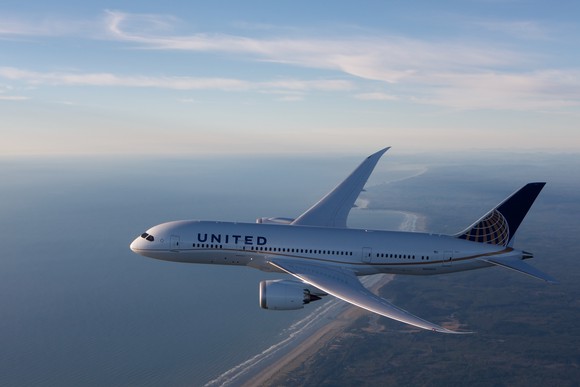
A United Airlines plane flying over a coastline

United Airlines posted solid unit revenue growth last quarter. Image source: United Airlines.

As a result, United Airlines managed to post an adjusted pre-tax margin of 10.4% last quarter (in the upper half of its guidance range). Adjusted earnings per share rose to $3.23 from $2.76 a year earlier, driven by share buybacks and the reduction of the federal corporate tax rate. On average, Wall Street analysts had expected EPS of $3.07.

United's adjusted pre-tax margin fell by 2.8 percentage points last quarter, compared to a 2.9-percentage-point decline at Delta. Considering that United's accelerated capacity growth raised the risk of short-term margin pressure, holding the margin gap with Delta steady was a big accomplishment.

Strong guidance as well

Looking ahead to the third quarter, United Airlines projected that unit revenue growth will accelerate, with PRASM up 4% to 6% year over year. Meanwhile, fuel costs are expected to be up substantially year over year once again, but nonfuel unit costs are on track to decline slightly.

The net result is that United's adjusted pre-tax margin will likely come in between 8% and 10%, down from 10.4% in the year-ago period. If a recent pullback in oil prices continues, there could be upside to that forecast.

Additionally, United Airlines raised its full-year EPS forecast for the second time this year. The original guidance range was $6.50-$8.50. United updated that to $7.00-$8.50 in April and $7.25-$8.75 in conjunction with its Q2 earnings report. The carrier also tweaked its full-year capacity guidance. It now plans to grow 4.5%-5%, down from its prior forecast of 4.5%-5.5% growth.

Delta still looks like a better investment

There wasn't anything to complain about in United's second-quarter earnings report. However, while it is now keeping pace with Delta (on a relative basis), it still isn't clear that it has the wherewithal to close the long-standing margin gap.

Indeed, Delta's adjusted pre-tax margin was nearly 4 percentage points ahead of United's in the first half of 2018. For the third quarter, Delta Air Lines expects to post a 12% to 14% pre-tax margin, once again ahead of United Airlines by about 4 percentage points.

To be fair, United Airlines' market cap is considerably lower, so the two companies trade for similar earnings multiples. However, Delta has less debt, and its higher profit margin makes it a less risky investment and should justify a higher earnings multiple. United Airlines is gradually stabilizing its profitability -- which is certainly a good sign -- but as long as the margin gap remains intact, Delta Air Lines stock is likely to be a better long-term investment.

Thursday, July 19, 2018

Papa John's Wants to Erase Papa From the Company

In this segment from�MarketFoolery, host Mac Greer is joined by analysts Jason Moser and Taylor Muckerman to consider the difficult needle that�Papa John's�(NASDAQ:PZZA)�will have to thread in distancing itself from John Schnatter, the ego-driven, foot-embedded-in-mouth founder. He was pushed to resign as chairman after word got out that he had used a racial slur during a corporate training session.

Now, the company's board has booted him from its corporate offices and is moving to expunge him from its advertising and branding. The question is whether that's feasible. And how far can Papa John's go in this disentanglement when Schnatter still owns 30% of it?

A full transcript follows the video.

This video was recorded on July 16, 2018.

Mac Greer: Let's begin with the ongoing soap opera that is Papa John's. This story is a mess. More fallout from reports that founder John Schnatter used a racial slur, the n-word, in a conversation with the company's former media agency. That happened last week, Jason. Schnatter acknowledged using the slur. He said it was in the context of a training exercise. And, he resigned as chairman.

Now, Papa John's has decided to evict Schnatter from the company's headquarters. They're scrubbing all of their marketing, trying to get rid of him from all of their marketing materials, and they're going to review all the ties that the company has with him. But the company is named Papa John's! What do they do?

Taylor Muckerman: What isn't tied to him?

Jason Moser: Like you said, this is a really tough situation. I think they are ultimately doing the right thing in trying to take action here quickly, as opposed to deliberating what they may or may not want to do. He's already fanned the flames in regard to other issues, whether it was the NFL situation ... he's had a really not good couple of years.

I think this really shines the light on the risks involved with any business where the individual is so closely associated with the brand. I mean, it's in the name, Papa John's. His likeness is on the pizza boxes. I think they're smart to try to get out in front of this thing and erase his existence. I don't know that people were buying the pizza because of him. I think people buy the pizza because they either like it or it's just really easy to do it from the app on your phone.

Greer: And they are getting his face off the boxes.

Moser: This just gives you the opportunity to set this business up for success for many years to come, if you can navigate this de-affiliation.

Greer: Taylor, what do you do here, if you're Papa John's?

Muckerman: I don't know. That's tough. It's certainly going to involve some costs. They'll probably have to retape every single commercial they've had over the last five or ten years. Probably won't be seeing any Papa John's spots during your commercial breaks over the next few months. It seems like they're going full bore. It'll probably be a little costly. They're going to be busy over there in the Papa John's marketing department.

Moser: He owns a good chunk of shares. That doesn't mean he can do whatever he wants to do. Really, that is the benefit of having a board and having leadership that is somewhat separated from executives or founders. You're not just stuck with one person calling all the shots.

Muckerman: Peyton Manning is no longer a quarterback. He sold his stores, but maybe he could come out of retirement and be the new CEO of Papa John's. [laughs]

Moser: What's the over-under on Peyton Manning starting some Pizza Hut franchises now that Pizza Hut is the NFL --

Greer: Do you rename it Peyton Manning's Pizza? Or PJ's?

Moser: [laughs] I think a lot of people would probably still feel like Peyton and John are a little too ...

Greer: Too tight.

Muckerman: They're still friends, yeah.

Moser: There's too much association there.

Greer: This quote really struck me. Papa John's is based in Louisville, Kentucky. A former Papa John's marketing director, a guy named Gary Langstaff, had this to say about Schnatter's problems. He said, "When you have an ego the size of Louisville, you say things without considering the ramifications."

Moser: Certainly.

Greer: I this once again -- I have to trademark this, it's the Mac Greer Humility Index. This guy lacks humility. He has a big mouth. When you throw in the racial insensitivity, then you have a bad, bad combination.

Moser: I kind of like that. Say that again, the Mac Greer ...

Greer: It's the Mac Greer Humility Index. The most humble CEOs I know, like Jim Sinegal -- not that I know a lot of CEOs, but just go with it.

Moser: [laughs] OK, I was waiting until this conversation was going toward Costco.

Greer: It's hypothetical. I just think that humility is a business advantage. It's not just a nice attribute, it's a business advantage.

Moser: I 100% agree, and I like that you're coining phrases with your own name in them.

Muckerman: That's true. Very humble.

Moser: It's a very humble act.

Greer: That's so true. I'm pathetic.

Moser: Last week, I was looking at Costco's June comps, remember? I was showing you, that was what we coined the Mac Greer Effect. It was your bump on Costco's sales --

Greer: OK, let's get my name out of it. I don't want my name in it.

Muckerman: MGHI.

Greer: It's a fair point. Gosh.

Moser: I think you have hit on a very important issue, in all seriousness, because clearly, he lacks the humility needed. I think you see other CEOs out there, they're figuring out ways to tap dance around these types of things, too. Let's use Elon Musk as an example, because recently he got in a skirmish on Twitter and blah blah. That's not the first time he's done that. You look at Elon Musk and Tesla. Now, Elon's likeness is not used for Tesla, and Tesla doesn't have his name in it, but that association is so close that he has to be very careful with stuff like that.

Muckerman: Oh, for sure.

Moser: And whether it was this back and forth with someone in regard to the cave rescue, or it was the political contributions --

Muckerman: The Republican Super PACs, yeah.

Moser: You see people on Twitter now going crazy, like, "I'm canceling my Tesla because I don't want to have this," and it's like, whatever. But, you see the problems when you have a company that's so levered to the individual. The individual has to be able to temper themselves. You have to learn when to just shut your mouth. In today's day and age, it's very easy to be heard anywhere, anytime.

It's easy for us to sit here and say it, I think it's a little bit more difficult in practice. People who are that successful, particularly that quickly, I mean, part of it is the hubris that got them there. Having to figure out how to temper that is, maybe, a little bit more difficult.

Greer: I'm going to take your advice. Now it's just the Humility Index, and I'm not trademarking it. Anyone can use it.

Moser: I'm keeping the Mac Greer Effect for my own purposes.

Greer: No! I want that out! I wish I had never said that! I apologize.

Wednesday, July 11, 2018

Facebook will chip in for users' birthday fundraisers

Facebook is sweetening the pot for all birthday fundraisers posted on its platform.

Continuing its efforts for social good -- and helping to get back into good graces with its users -- the social network said on Tuesday it will donate $5 to every newly created fundraiser posted on a US user's birthday. The fundraiser must support one of the 750,000 vetted US nonprofits approved to raise money using the platform.

Last year, Facebook (FB) introduced the feature, allowing users to select an organization, set a goal amount and enter a custom message. Friends who see the post can make a donation.

The money will come from the Facebook Donations Fund to help nonprofits boost fundraising. The company previously said it would pour $50 million into the fund for 2018.

Facebook will only be adding contributions for a limited time, but Ian Alexander -- a product manager on Facebook's Social Good team -- didn't elaborate on a timeline.

"We're committed to helping as long and as much as we can," Alexander told CNNMoney.

It's unclear how much money has been raised through the effort or how many users have participated. However, Alexander said birthday fundraisers are one of the company's most popular fundraising tools.

In November, the company eliminated fees for nonprofits, so 100% of donations made through the platform go directly to the groups.

Donations like this can add a new stream of revenue for nonprofits without requiring much effort on their part.

The Marine Mammal Center, a California-based nonprofit that rescues marine mammals, said it has raised about $30,000 from Facebook birthday fundraisers over the last year. Overall, the majority of its revenue comes from individual donors.

"For nonprofits across the board, it can cost a lot of money to raise a dollar," said Laura Sherr, a spokeswoman for The Marine Mammal Center. "To have a platform and a channel that does not require a lot of work on our end means we can spread our story to even more people."

Christopher McClean, an analyst at Forrester, applauded Facebook's efforts to give back and engage with users but said it could be seen as an effort to boost the company's image after a tough year so far. The company recently faced concerns over data handling and a bug that temporarily unblocked users.

"[Some people] won't be swayed by this campaign," he said. "They want very clear and specific changes Facebook is making to take care of people's privacy and protect their data."

Monday, July 9, 2018

Driving the Subaru 360, one of the worst cars ever sold in America

Proving that, in America, anything is possible, Subaru got its start here 50 years ago by importing a car so bad it nearly doomed the brand from the start.

Today, Subaru (FUJHF) cars and SUVs are lauded for their safety and quality. Consumer Reports, arguably the most influential magazine among car shoppers, routinely praises its products.

Consumer Reports was influential in 1968, too, which is why the magazine's devastating review of the tiny Subaru 360 was so damaging. It took the tiny car a full 37.5 seconds to go from zero to 50 miles an hour. Sixty miles an hour on flat ground wasn't really possible with the car's 25 horsepower two-cylinder engine. That was probably a good thing. The front bumpers were "virtually useless against anything more formidable than a watermelon," the magazine said. Handling was dangerously bad. During abrupt maneuvers, the back wheels tended to curl up under the car like a turtle's leg.

In short, the Subaru 360 was "Not Acceptable," the magazine wrote, in large letters.

Sales of the 360 collapsed. The man whose idea it had been to import the cars, Malcolm Bricklin, left the company. He would try again, about 20 years later, with a Yugoslav car imported as the Yugo. In a recent interview with CNNMoney, Bricklin blamed Consumer Reports for the 360's failure and insisted the car wasn't bad, considering its price. It cost $1,300. Toyota's cheapest model, the Corolla, cost hundreds more.

Bricklin's clever idea with the 360 was to import a car that wasn't, under American rules, a car at all. As far as American regulators were concerned, if it weighed less than 1,000 pounds, it was not a car and, so, was exempt from many regulations. The Subaru 360 weighed 965 pounds.

My curiosity, and my courage, were piqued. I had never heard of a car this bad. I have driven a Yugo, and it didn't really seem atrocious, considering its $3,995 starting price in the late 1980s, thousands less than a Toyota Tercel.

subaru 360 Small and underpowered in its day, the Subaru 360 feels even more out of place on modern roads.
The 360 I borrowed from a top Subaru USA executive and drove on roads and highways around the company's New Jersey headquarters was, indeed, awful. In fact, it was the very worst car I have ever driven. It made me alternately laugh out loud and fear, deep down in my quivering guts, for my very life.

A Subaru 360 is 3 feet shorter than a Volkswagen Beetle. It is a tiny car on tiny wheels with a tiny little engine. On a modern highway, it is a toy sailboat in a rushing river of mega-yachts. I leaned forward, trying to crush the gas pedal down a little further. The mower-sized two-cylinder engine raged loudly, trying its hardest to keep me from getting run over by SUVs. The best I could manage, ever, was something over 45 miles an hour, and it took everything to get there.

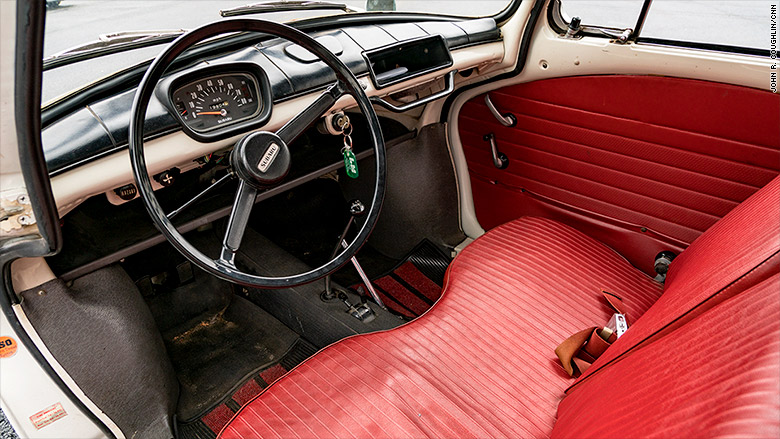
subaru 360 Even by the standards of cheap cars, the Subaru 360 was spartan.
Most of the time, the brakes offered the mere suggestion of stopping. They did work, in their way, when I had to make a real panic stop. A car �� one with brakes �� pulled in front of me and stopped hard. Instinctively, my foot smashed the brake pedal. The 360's snout dropped down toward the asphalt while its hind end rose into the air like a cat getting its butt scratched. I yanked at the steering as the car squirmed side to side, threatening to turn sideways and put its belly into the air. Finally, it came to a shuddering stop before I hit anything.

It was a driving experience as impressive as any I have had. It was impressive how far a company can come from a beginning like that.

Friday, July 6, 2018

Two key levels on the S&P 500 will signal where it heads next

For all the talk of a trade war and an eager-to-hike Fed, markets haven��t moved much this summer. The S&P 500 is now back to where it was in mid-May.

Two key levels could bring about the next big swings on the S&P 500, says one market watcher.

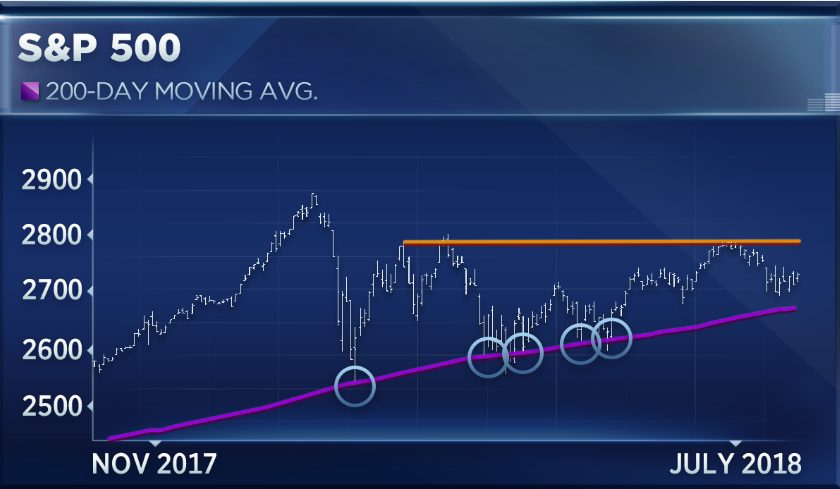
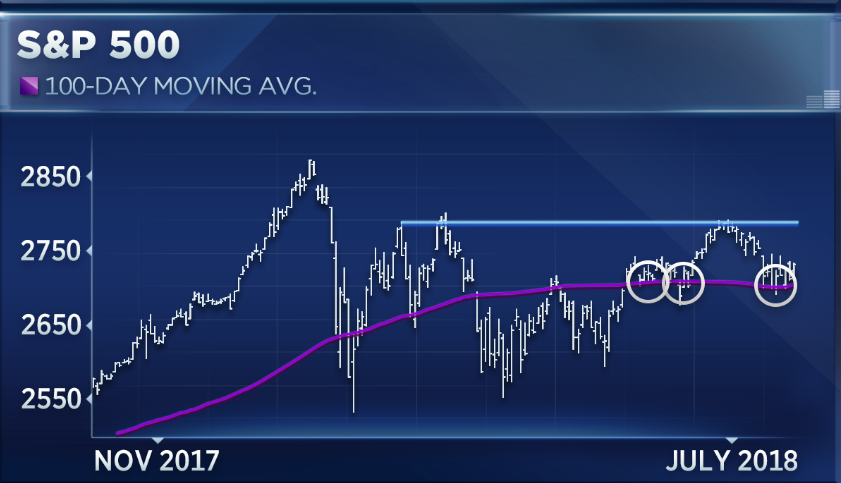
��On the resistance level it��s the 2,800 level. That��s where we topped out in February, March and in June of this year,�� Matt Maley, equity strategist at Miller Tabak, told CNBC��s ��Trading Nation�� on Thursday.

The benchmark index moved as high as a record 2,872 in late January before falling back in early March. It bumped up against 2,800 again in mid-March but failed to hold the level.

��If we can break above that, that��s going to give a lot of upside momentum to the market and we should see a quick move up to the all-time highs. That��s going to be very bullish,�� Maley said.

One level of support lies at its 100-day moving average of 2,705, says Maley. The S&P briefly touched that level in intraday trading in early July, but mostly held above it.

��The more important level, of course, is the 200-day moving average. It is one it��s bounced off of several times this year,�� Maley said. ��You break below that and I think it��s going to be a quick move down to the intraday lows of February.��

The S&P 500 currently trades 2 percent above its 200-day moving average of 2,679. It last broke that trend line in early May.

The risks to the S&P 500 are intensifying, says Boris Schlossberg, managing director of FX strategy at BK Asset Management. He sees the largest headwind in the trade conflict with China.

��The kind of very negative geopolitical implications of a trade war �� could have very long-term ramifications that could basically destroy a lot of this recovery, so I think it��s a touch-and-go situation,�� Schlossberg said on Thursday��s ��Trading Nation.�� ��Until the political situation is kind of resolved and we have some clarity, it��s difficult to make a strong case for equities.��

The U.S. hit China with its first round of tariffs early Friday and has threatened more to come. The Trump administration has imposed tariffs on $34 billion worth of Chinese goods and China immediately retaliated with similar tariffs on U.S. goods.

Vote Vote to see results Total Votes:

Not a Scientific Survey. Results may not total 100% due to rounding.

Disclaimer

Thursday, July 5, 2018

Sainsbury's sales growth slows

(Adds sales numbers from last year and share price)

J Sainsbury PLC (SBRY.LN) said Wednesday that sales growth slowed in the first quarter as it cut prices on key products due to a competitive U.K. grocery market.

Britain's second-largest grocer by market share also said that it has agreed to a 3.50 billion pounds ($4.61 billion) financing package with its existing banks and new institutions for its proposed merger with Asda Group Ltd. Sainsbury's current line of credit will increase to GBP2 billion from GBP1.5 billion, providing further financial flexibility to the combined group.

On April 30, Walmart Inc. WMT, +0.52% said it will sell its U.K. business, Asda, to Sainsbury in a deal worth GBP7.30 billion. If the tie-up is approved by Britain's Competition & Market Authority it would create the largest grocer in the U.K.

For the 16 weeks to June 30, Sainsbury said like-for-like retail sales rose 0.2% compared with 2.3% growth in the same period a year earlier. Total retail sales increased 0.8% verses a 2.7% growth last year.

Grocery sales also slowed with the group recording growth of 0.5% in the first quarter, compared with 3% the previous year and Sainsbury said it has invested GBP150 million to lower prices.

The bright spot in Sainbsury's first quarter was general merchandise, which saw sales rise 1.7% against 1% last year. However, clothing sales grew 0.8%, below the 7.2% growth reported a year earlier.

Sainsbury is losing out to rivals in its core grocery business, according to Neil Wilson, chief market analyst at Markets.com, following data from Kantar Worldwide that said Sainsbury's sales and market share fell in the 12 weeks to June 17, in contrast with its peers. Sainsbury's sales fell 0.2%, while sales for Tesco PLC (TSCO.LN), Asda and Wm. Morrison Supermarkets PLC (MRW.LN) rose between 1.4% and 1.9% in the period. Meanwhile, sales at discount grocers Aldi increased 8.2% and grew 10% at Lidl.

Chief Executive Mike Coupe said general merchandise and clothing, including sales from the Argos catalogue business, "continue to outperform a very challenging market and we are well placed to further grow market share."

Mr Coupe said first-quarter headline numbers reflect price reductions the company made in key areas like fresh meat, fruit and vegetables since March. He said the market remains competitive, but the company has the right strategy in place and the Asda proposed merger will "create a dynamic new player in U.K. retail".

At 1030 GMT, Sainsbury shares were up 6.40 pence, or 2%, at 325 pence.

Wednesday, July 4, 2018

Flotek Industries (FTK) Downgraded to Sell at ValuEngine

ValuEngine lowered shares of Flotek Industries (NYSE:FTK) from a hold rating to a sell rating in a research report sent to investors on Monday morning.

Separately, Zacks Investment Research cut shares of Flotek Industries from a hold rating to a strong sell rating in a research report on Friday, May 11th.

Get Flotek Industries alerts:

Shares of Flotek Industries opened at $3.20 on Monday, Marketbeat reports. The company has a market capitalization of $183.67 million, a PE ratio of -45.71 and a beta of 1.49. Flotek Industries has a 12 month low of $3.03 and a 12 month high of $9.53.

Flotek Industries (NYSE:FTK) last issued its earnings results on Wednesday, May 9th. The oil and gas company reported $0.01 EPS for the quarter, beating the consensus estimate of ($0.10) by $0.11. The company had revenue of $60.52 million during the quarter, compared to analysts’ expectations of $60.50 million. Flotek Industries had a negative net margin of 5.16% and a positive return on equity of 0.37%. The business’s revenue for the quarter was down 24.3% compared to the same quarter last year. During the same period in the previous year, the company earned ($0.01) EPS. sell-side analysts predict that Flotek Industries will post -0.2 earnings per share for the current fiscal year.

In related news, insider H. Richard Walton purchased 20,000 shares of the firm’s stock in a transaction that occurred on Wednesday, May 16th. The shares were bought at an average cost of $3.38 per share, with a total value of $67,600.00. Following the acquisition, the insider now owns 276,547 shares of the company’s stock, valued at approximately $934,728.86. The transaction was disclosed in a legal filing with the Securities & Exchange Commission, which is accessible through this hyperlink. Also, EVP Joshua A. Snively purchased 10,216 shares of the firm’s stock in a transaction that occurred on Wednesday, May 16th. The shares were bought at an average cost of $3.41 per share, for a total transaction of $34,836.56. Following the completion of the acquisition, the executive vice president now directly owns 94,975 shares in the company, valued at approximately $323,864.75. The disclosure for this purchase can be found here. Insiders bought a total of 63,816 shares of company stock valued at $217,013 over the last 90 days. Corporate insiders own 4.86% of the company’s stock.

Several institutional investors have recently made changes to their positions in the stock. Rhumbline Advisers grew its holdings in shares of Flotek Industries by 14.7% during the 4th quarter. Rhumbline Advisers now owns 134,176 shares of the oil and gas company’s stock valued at $625,000 after purchasing an additional 17,161 shares during the last quarter. Boston Partners grew its holdings in shares of Flotek Industries by 2.8% during the 1st quarter. Boston Partners now owns 821,680 shares of the oil and gas company’s stock valued at $5,012,000 after purchasing an additional 22,760 shares during the last quarter. Schwab Charles Investment Management Inc. grew its holdings in shares of Flotek Industries by 10.8% during the 1st quarter. Schwab Charles Investment Management Inc. now owns 282,218 shares of the oil and gas company’s stock valued at $1,722,000 after purchasing an additional 27,597 shares during the last quarter. MetLife Investment Advisors LLC bought a new stake in shares of Flotek Industries during the 4th quarter valued at approximately $133,000. Finally, Trexquant Investment LP grew its holdings in shares of Flotek Industries by 261.4% during the 1st quarter. Trexquant Investment LP now owns 61,177 shares of the oil and gas company’s stock valued at $373,000 after purchasing an additional 44,247 shares during the last quarter. 81.04% of the stock is currently owned by institutional investors.

About Flotek Industries

Flotek Industries, Inc develops and supplies chemistry and services to the oil and gas industries in the United States and internationally. It operates through two segments, Energy Chemistry Technologies; and Consumer and Industrial Chemistry Technologies. The Energy Chemistry Technologies segment is involved in the design, development, manufacture, packaging, and marketing of chemistries under the Complex nano-Fluid brand name for use in oil and gas well drilling, cementing, completion, stimulation, and production activities, as well as for use in enhanced and improved oil recovery markets.

To view ValuEngine’s full report, visit ValuEngine’s official website.