Monday, September 30, 2013

Is Disney Ready to Continue Its Bull Run?

With shares of Disney (NYSE:DIS) trading around $65, is DIS an OUTPERFORM, WAIT AND SEE, or STAY AWAY? Let's analyze the stock with the relevant sections of our CHEAT SHEET investing framework:

T = Trends for a Stock’s Movement

Disney is a diversified worldwide entertainment company. The company operates in five business segments: media networks, parks and resorts, studio entertainment, consumer products, and interactive. Disney offers entertainment that sends smiles to consumers across a range of countries around the world. Its movies and shows, theme parks, and products have remained a main attraction for many years and will continue well into the future.

Bob Iger, Disney's chairman and chief executive, says that the studio might create content specifically for Netflix (NASDAQ:NFLX), Amazon (NASDAQ:AMZN), or other similar online-streaming providers in the near future, in what amounts to another signal that the largest studios are increasingly focusing on finding ways to succeed in the new home-entertainment landscape.

Disney ‘s CEO made the comments in a television interview on Fox Business Network Tuesday when asked about the future of Disney's entertainment content now that platforms such as Netflix and Amazon are becoming increasingly ubiquitous in use. Iger hinted that content created for the specific online platforms could come from a variety of Disney's most popular assets, including Lucasfilm, Marvel, Pixar, or ESPN.

Best Undervalued Companies To Buy For 2014

T = Technicals on the Stock Chart Are Strong

Disney stock has been flying higher in recent years. The stock has paused for most of this year as it digests gains from its recent bullish run. Analyzing the price trend and its strength can be done using key simple moving averages. What are the key moving averages? The 50-day (pink), 100-day (blue), and 200-day (yellow) simple moving averages. As seen in the daily price chart below, Disney is trading above its rising key averages, which signal neutral to bullish price action in the near-term.

DIS

(Source: Thinkorswim)

Taking a look at the implied volatility (red) and implied volatility skew levels of Disney options may help determine if investors are bullish, neutral, or bearish.

Implied Volatility (IV)

30-Day IV Percentile

90-Day IV Percentile

Disney Options

22.37%

73%

71%

What does this mean? This means that investors or traders are buying a very significant amount of call and put options contracts as compared to the last 30 and 90 trading days.

Put IV Skew

Call IV Skew

October Options

Flat

Average

November Options

Flat

Average

As of today, there is an average demand from call buyers or sellers and low demand by put buyers or high demand by put sellers, all neutral to bullish over the next two months. To summarize, investors are buying a very significant amount of call and put option contracts and are leaning neutral to bullish over the next two months.

On the next page, let’s take a look at the earnings and revenue growth rates and the conclusion.

E = Earnings Are Increasing Quarter-Over-Quarter

Rising stock prices are often strongly correlated with rising earnings and revenue growth rates. Also, the last four quarterly earnings announcement reactions help gauge investor sentiment on Disney’s stock. What do the last four quarterly earnings and revenue growth (Y-O-Y) figures for Disney look like and more importantly, how did the markets like these numbers?

2013 Q2

2013 Q1

2012 Q4

2012 Q3

Earnings Growth (Y-O-Y)

0.00%

31.75%

-3.75%

17.34%

Revenue Growth (Y-O-Y)

4.42%

9.61%

5.21%

3.42%

Earnings Reaction

-1.70%

-0.12%

0.42%

-5.95%

Disney has seen increasing earnings and revenue figures over the last four quarters. From these numbers, the markets have had mixed feelings about Disney’s recent earnings announcements.

P = Weak Relative Performance Versus Peers and Sector

How has Disney stock done relative to its peers, Dreamworks (NASDAQ:DWA), Time Warner (NYSE:TWX), 21st Century Fox (NASDAQ:FOXA), and sector?

Disney

Dreamworks

Time Warner

21st Century Fox

Sector

Year-to-Date Return

31.29%

73.69%

38.39%

50.35%

45.38%

Disney has been a poor relative performer, year-to-date.

Conclusion

Disney is a global entertainment company that aims to deliver smiles to many consumers worldwide. It is being reported that the company is considering creating digital content specifically for Internet streaming services. The stock has seen a strong run in recent years but is now consolidating as it digests gains from its recent move higher. Over the last four quarters, earnings and revenues have been rising, however, investors have had mixed feelings about recent earnings announcements. Relative to its peers and sector, Disney has been a weak year-to-date performer. WAIT AND SEE if Disney can break above its consolidation range.

Saturday, September 28, 2013

Glu Mobile Must Prove Itself Now

After ten days of strong downloads for a new hit game followed up by strong stock gains, Glu Mobile (GLUU) must prove that its monetization platform actually works. Its successful Deer Hunter franchise released the latest version on September 18. Deer Hunter 2014 quickly jumped to the top of domestic iPhone download charts and reached the top ten grossing iPhone games in the U.S. and set company records for global revenues from a single game.

The company is a leading global developer and publisher of freemium games for smartphones and tablets, but it has had a disappointing year with games that haven't monetized as expected; it spent a lot of money buying technology and hiring experts in the field to develop the GluOn platform. With Deer Hunter 2014 already starting to slip down the top grossing charts, the question that Glu Mobile needs to answer is whether the platform can deliver in keeping a game monetizing on top of the charts for months?

Deer Hunter 2014 Numbers

The company released prior to the open on September 25 that Deer Hunter 2014 had reached several milestones including records for single-day downloads and sales. The major milestones as listed by the company are below:

Glu record 5M+ downloads in first 7 days of global releaseSingle-day Glu record of 1M+ downloads globally from a single Glu titleReached #7 U.S. App Store Top Grossing chart position for iPhoneSingle-day Glu record of gameplay sessions (18M+)Single-day record for global revenues from a single Glu title#1 Top Free App ranking in 19 countries#1 Top Free Game ranking in 78 countries

The CEO made an interesting statement that the company is only scratching the service as far as the GluOn platform, but the company will need to prove staying power in order to win over investors.

Top 5 Oil Companies For 2014

Updated App Annie Stats

The updated App Annie stats are where investors start getting concerned. The gam! e has started dropping in the rankings. For U.S. iPhone stats, the game is down to the second most downloaded free game and the more important grossing numbers show the game has already dropped to #11. See the list below:

(click to enlarge)

Naturally, the game is still in early days and the all important downloads remain strong. The key now will be whether the GluOn platform works. With over 5 million downloads in the first 7 days of global release and possibly millions more now that the game is live on Android, the company should have plenty of users to turn on the magic of the competition via Club Hunt challenges.

As mentioned on the recent Q2 earnings call, the President of Studios discussed the success of the monetization team in optimizing live titles. As an example, Eternity Warriors 2 saw a 60% uptick in revenue with the release of chance-based purchase systems in version 3.2 and Contract Killer 2 saw a significant revenue lift with each live tournament. Now the company has the chance to prove the benefits of the games-as-a-service (GAAS) concept with a game that is setting company records for downloads.

Strong Support

The below chart shows strong support below the current levels:

Glu Mobile - 2 Year Chart

(click to enlarge)

Conclusion

With analysts expecting revenue of $28 million for Q4 and the huge success of Deer Hunter 2014 so far, Glu Mobile has a chance to finally surprise the market. The company has some major launches in Q4 including Eternity Warriors 3, Frontline Commandos 2, and Motocross Meltdown that could provide a substantial blowout of expectations. Remember that the company generated nearly $22 million in revenue! during Q! 213 with no new titles and Q413 has the benefit of four major titles on a new platform, plus up to six games generating 3rd party publishing revenue. If Glu Mobile can't generate a significant revenue beat during Q4, than the company probably has no business being public.

Source: Glu Mobile Must Prove Itself Now

Disclosure: I have no positions in any stocks mentioned, and no plans to initiate any positions within the next 72 hours. I wrote this article myself, and it expresses my own opinions. I am not receiving compensation for it (other than from Seeking Alpha). I have no business relationship with any company whose stock is mentioned in this article. (More...)

Additional disclosure: The information contained herein is for informational purposes only. Nothing in this article should be taken as a solicitation to purchase or sell securities. Before buying or selling any stock you should do your own research and reach your own conclusion or consult a financial advisor. Investing includes risks, including loss of principal.

Wednesday, September 25, 2013

LIN Media LLC (LIN): The Next Small Cap Media or Social Media Giant? SBGI, NXST & PBS

Small cap media stock LIN Media LLC (NYSE: LIN) might not be a household name, but there is a good chance you might be watching the company's programs because like the Sinclair Broadcast Group, Inc (NASDAQ: SBGI) and Nexstar Broadcasting Group, Inc (NASDAQ: NXST), its helping to consolidate the media industry plus its making investment in other forms of media like social media. The stock has also outperformed those two peers along with the PowerShares Dynamic Media Portfolio ETF (NYSEARCA: PBS).

What is LIN Media LLC?

Small cap LIN Media LLC is a local multimedia company that operates or services 43 television stations and seven digital channels in 23 US markets plus the company has a diverse portfolio of web sites, apps and mobile products. More specifically, LIN Media delivers local news and community stories, sports and entertainment programming to 10.5% of U.S. television homes while digital media operations focus on emerging media and interactive technologies for the delivery of performance-driven digital marketing solutions to agencies and brands. The company also has strategic investments in Nami Media (an online marketing and technology company that specializes in performance marketing), HYFN (a full service digital agency that develops and implements award-winning mobile, social and web experiences for some of the world's largest brands), Dedicated Media (direct response marketing), EndPlay (a Software as a Service or SaaS provider of Web Content Management solutions to enterprise clients in the media, entertainment and education industries) and VoxFrontera (a leader in providing automated, real-time Spanish captioning to the TV industry).

Hot Low Price Stocks To Invest In Right Now

For reference, the Sinclair Broadcast Group is one of the largest and most diversified television broadcasting companies in the country as it owns and operates, programs or provides sales services to 149 television stations in 76 markets, reaching approximately 38% of US television households while Nexstar Broadcasting Group owns or provide services to 72 broadcast television stations and 43 community portal websites located in 41 markets in 18 states, reaching approximately 13.8 million television households, or approximately 12.1% of all USTVHH.

Finally, the PowerShares Dynamic Media Portfolio ETF tracks the Dynamic Media IntellidexSM Index (Intellidex Index) which is comprised of common stocks of 30 US media companies.

What You Need to Know About Small Cap LIN Media LLC

LIN Media LLC's recent history is somewhat convoluted as in February, it was reported that LIN Television Corp. has paid $100 million to withdraw from a joint venture involving stations in San Diego and Dallas that had the company on the hook for an $815.5 million note. The transaction resulted in a material gain of $715.5 million in taxable income. The company's CEO was quoted as saying:

"We are very excited about this transaction because it is the first step in resolving once and for all the NBC JV guarantee and tax overhangs that have in recent years limited our strategic options and have kept some investors on the sidelines. We plan to move as rapidly as practical to execute the merger that will cause the LLC Conversion and expect to close this transaction within the next four to six months."

It was noted at the end of July that LIN Media, as the surviving company in the merger, would begin trading on the New York Stock Exchange on July 31 with shares of LIN TV common stock converted into common shares of LIN Media on a one-for-one basis.

In early August, LIN Media LLC filed its financials and it was noted in the filing that had it not been for acquisitions, revenue would have been flat, but interactive revenues did increase from $10.520 million to $20,837 million year-over-year.

Finally, it should be mentioned that in late August, LIN Media LLC filed a registration to sell, from time to time, up to $250 million of Common Shares, Preferred Shares, Warrants, Debt Securities, Guarantees, Units, or any combination thereof. The company also filed to sell up to 9,855,000 shares on behalf of selling shareholders and won't receive proceeds from those secondary sales.

Share Performance: LIN Media LLC and SBGI, NXST & PBS

On Wednesday, small cap LIN Media LLC rose 0.30% to $16.93 (LIN has a 52 week trading range of $4.05 to $18.66 a share) for a market cap of $885.05 million plus the stock is up 106.46% since the start of the year, up 316% over the past year and up 198.6% over the past five years. A quick look at a chart comparison of LIN Media LLC verses Sinclair Broadcast Group, Nexstar Broadcasting Group and PowerShares Dynamic Media Portfolio ETF, reveals its been a top performing media stock:

Finally, here is a look at the most recent technical charts for Media LLC along with SBGI, NXST and PBS:

The Bottom Line. The registration to file additional shares will probably impact current shareholders. However, investors should still keep an eye on LIN Media LLC as consolidation in the media industry is a trend that's expected to continue plus it has good exposure to new media businesses.

Sunday, September 22, 2013

Top 10 Small Cap Companies To Buy For 2014

Do not forget law of demand: Go back to basics of Economics. When the price of a good falls, the demand for it rises and vice versa. In stock market, retail investors start thronging the market only when it starts going up drastically. This is a wrong approach. The stocks need to be bought when they are available cheap and not when the prices have firmed up.

Do not make lump sum investment: If the stock market has started looking like the most desired destination for your investment after it has gone up substantially, it is better to invest small amount of money and not make lump sum investment. Put small money through mutual funds and invest regularly.

Do not get influenced by stock tips: Now that the market has started going up, the next to follow will be rumors. This will include lots of information exchange on small cap stocks which till the other day nobody had even heard of. It is time to be careful about these stocks. Do not buy these stocks which mostly sold through word of mouth and retail investors find them stuck after certain time.

Top 10 Small Cap Companies To Buy For 2014: Sky-mobi Limited(MOBI)

Sky-mobi Limited engages in the operation of a mobile application store in the People?s Republic of China. It works with handset companies to pre-install its Maopao mobile application store on handsets and with content developers to provide users with applications and content titles. The users of its Maopao store could browse, download, and purchase a range of applications and content, such as single-player games, mobile music, and books. The company?s Maopao store enables mobile applications and content to be downloaded and run on various mobile handsets with hardware and operating system configurations. It also operates a mobile social network community, the Maopao Community, where it offers localized mobile social games, as well as applications and content with social network functions to its registered members. The company owns proprietary mobile application technology in the cloud computing, the MRP format, and SDK development environment. As of March 31, 2011, it had entered into cooperation agreements with approximately 523 handset companies to pre-install Maopao. The company was formerly known as Profit Star Limited and changed its name to Sky-Mobi Limited in October 2010. Sky-mobi Limited was incorporated in 2007 and is headquartered in Hangzhou, China.

Top 10 Small Cap Companies To Buy For 2014: bebe stores inc.(BEBE)

bebe stores, inc. engages in the design, development, and production of women?s apparel and accessories. Its products include a range of separates, tops, dresses, active wear, and accessories in career, evening, casual, and active lifestyle categories. The company markets its products under the bebe, BEBE SPORT, bbsp, and 2b bebe brand names targeting 21 to 34-year-old woman. As of July 2, 2011, it operated 252 retail stores, and an online store at bebe.com in the United States, the District of Columbia, Puerto Rico, the U.S. Virgin Islands, Japan, and Canada, as well as 60 international licensee operated stores in south east Asia, the United Arab Emirates, Israel, Russia, Mexico, and Turkey. The company was founded in 1976 and is headquartered in Brisbane, California.

Top Biotech Companies To Invest In Right Now: FuelCell Energy Inc.(FCEL)

FuelCell Energy, Inc., together with its subsidiaries, engages in the development, manufacturing, and sale of high temperature fuel cells for clean electric power generation primarily in South Korea, the United States, Germany, Canada, and Japan. The company offers proprietary carbonate Direct FuelCell Power Plants that electrochemically produce electricity from hydrocarbon fuels, such as natural gas and biogas. Its fuel cells operate on a range of hydrocarbon fuels, including natural gas, renewable biogas, propane, methanol, coal gas, and coal mine methane. The company also develops carbonate fuel cells, planar solid oxide fuel cell technology, and other fuel cell technologies. It provides its products to universities; manufacturers; mission critical institutions, such as correction facilities and government installations; hotels; and natural gas letdown stations, as well as to customers who use renewable biogas for fuel, including municipal water treatment facilities, br eweries, and food processors. The company was founded in 1969 and is headquartered in Danbury, Connecticut.

Top 10 Small Cap Companies To Buy For 2014: Rackspace Hosting Inc(RAX)

Rackspace Hosting, Inc. operates in the hosting and cloud computing industry. It provides information technology (IT) as a service, managing Web-based IT systems for small and medium-sized businesses, as well as large enterprises worldwide. The company?s service suite includes dedicated hosting comprising customer management portal and other management tools that manage data center, network, hardware devices, and operating system software; and cloud computing that enables customers to provide and manage a pool of computing resources, as well as delivery of computing resources to business when they need them. It offers cloud servers, cloud files, and cloud sites, as well as cloud applications, such as email, collaboration, and file back-ups; and hybrid hosting that provides a combination of dedicated hosting and cloud computing services. The company also offers customer support services. It sells its service suite through direct sales teams, third-party channel partners, an d online ordering. The company was formerly known as Rackspace.com, Inc. and changed its name to Rackspace Hosting, Inc. in June 2008. Rackspace Hosting, Inc. was founded in 1998 and is headquartered in San Antonio, Texas.

Top 10 Small Cap Companies To Buy For 2014: Panera Bread Company(PNRA)

Panera Bread Company, together with its subsidiaries, owns, operates, and franchises retail bakery-cafes in the United States and Canada. Its bakery-cafes offer fresh baked goods, sandwiches, soups, salads, custom roasted coffees, and other complementary products, as well as provide catering services. The company also manufactures and supplies dough and other products to company-owned and franchise-operated bakery-cafes. As of March 29, 2011, it owned and franchised 1,467 bakery-cafes under the Panera Bread, Saint Louis Bread Co., and Paradise Bakery & Cafe names. The company was founded in 1981 and is based in St. Louis, Missouri.

Advisors' Opinion:
  • [By William White]

    Ron Shaich, CEO of Panera Bread (PNRA), will live on a food-stamp budget of $4.50 a day for food for one week.

    Shaich is living on the food-stamp budget as part of the SNAP challenge. SNAP is the system that replaced food stamps. Shaich started the challenge on Saturday and is documenting his challenge on LinkedIn (LNKD). Shaich took his $31.50, the average weekly budget for someone on SNAP, to a grocery store and bought�cereal, pasta, lentils, chickpeas and some vegetables. He noted that it was a barren shopping cart and that he didn’t know if he would be able to sustain himself on the budget. Shiach spent�$25.95 on the food he bought that day, which leaves him with $5.55 to buy food with for the rest of the week, reports Daily Finance.

  • [By Matt Brownell]

    Michael L Abramson/Getty Images For the next week, Ron Shaich will live well below his means: The Panera Bread (PNRA) CEO embarked on a quest Saturday to spend a week living on food stamps. "As part of Hunger Action Month, I decided to take the SNAP Challenge," Shaich announced on LinkedIn last week. "For one week, beginning Saturday, September 14, 2013, I will live on just $4.50 a day, the average daily benefit per person provided by the Supplemental Nutrition Assistance Program (SNAP; formerly known as Food Stamps)." A number of liberal politicians, including Newark Mayor Cory Booker have taken the SNAP Challenge, publicly documenting their quest to eat on less than $5 a day (the weekly allowance is $31.50). The challenge has become a popular way to see how the other half lives, call attention to hunger issues and protest budget cuts.

Top 10 Small Cap Companies To Buy For 2014: KongZhong Corporation(KONG)

KongZhong Corporation, together with its subsidiaries, provides wireless interactive entertainment, media, and community services to mobile phone users in the People's Republic of China. It also involves in the development, distribution, and marketing of consumer wireless value-added services, including wireless application protocol, multimedia messaging services, short messaging services, interactive voice response services, and color ring back tones. In addition, it offers interactive entertainment services, such as mobile games, pictures, karaoke, electronic books, mobile phone personalization features, entertainment news, chat, and message boards; and through Kong.net offer news, community services, games, and other interactive media and entertainment services; and sells advertising space in the form of text-link, banner, and button advertisements. Further, the company develops and publishes mobile games, including downloadable mobile games and online mobile games cons isting of action, role-playing, and leisure games. As of December 31, 2009, it had a library of approximately 300 internally developed mobile games. Additionally, it develops online games; and provides consulting and technology services, as well as media and net book services. The company was formerly known as Communication Over The Air Inc. and changed its name to KongZhong Corporation in March 2004. KongZhong Corporation was founded in 2002 and is headquartered in Beijing, the People?s Republic of China

Top 10 Small Cap Companies To Buy For 2014: Hot Topic Inc.(HOTT)

Hot Topic, Inc., together with its subsidiaries, operates as a mall- and Web-based specialty retailer in the United States. The company operates Hot Topic and Torrid store concepts, as well as an e-space music discovery concept, ShockHound. Its Hot Topic stores sell music/pop culture-licensed merchandise, including tee shirts, hats, posters, stickers, patches, postcards, books, novelty accessories, CDs, and DVDs; and music/pop culture-influenced merchandise comprising women?s and men?s apparel and accessories, such as woven and knit tops, skirts, pants, shorts, jackets, shoes, costume jewelry, body jewelry, sunglasses, cosmetics, leather accessories, and gift items for young men and women primarily between the ages of 12 and 22. The company?s Torrid stores sells casual and dressy jeans and pants, fashion and novelty tops, sweaters, skirts, jackets, dresses, hosiery, shoes, intimate apparel, and fashion accessories for various lifestyles for plus-size females primarily betw een the ages of 15 and 29. As of July 30, 2011, it operated 636 Hot Topic stores in 50 states, Puerto Rico, and Canada; 145 Torrid stores; and Internet stores, hottopic.com and torrid.com. The company was founded in 1988 and is headquartered in City of Industry, California.

Top 10 Small Cap Companies To Buy For 2014: ATA Inc.(ATAI)

ATA Inc., through its subsidiaries, provides computer-based testing services in the People?s Republic of China. It offers services for the creation and delivery of computer-based tests utilizing its test delivery platform, proprietary testing technologies, and testing services; and provides logistical support services relating to test administration. The company?s computer-based testing services are used for professional licensure and certification tests in various industries, including information technology (IT) services, banking, securities, teaching, and insurance. Its e-testing platform integrates various aspects of the test delivery process for computer-based tests ranging from test form compilation to test scoring, and results analysis. ATA also provides career-oriented educational services, such as single course programs, degree major course programs, and pre-occupational training programs focusing on preparing students to pass IT and other vocational certification tests; test preparation and training programs and services to test candidates preparing to take professional certification tests in securities, futures, banking, insurance and teaching industries; online test preparation and training platform for the securities and banking industries; and test preparation software for the teaching industry. In addition, the company offers HR select employee assessment solution, an online system that utilizes its proprietary software and an inventory of test titles to help employers improve the efficiency and accuracy of their employee recruitment process. As of March 31, 2010, it had contractual relationships with 1,988 ATA authorized test centers. The company serves Chinese governmental agencies, professional associations, IT vendors, and Chinese educational institutions, as well as individual test preparation services. ATA Inc. was founded in 1999 and is based in Beijing, the People?s Republic of China.

Top 10 Small Cap Companies To Buy For 2014: China Metro-Rural Holdings Limited(CNR)

China Metro-Rural Holdings Limited, through its subsidiaries, primarily engages in the development and operation of agricultural logistics and trade centers in northeast China. It also involves in purchasing, processing, assembling, merchandising, and distributing pearls and jewelry products. The company markets its pearls and jewelry products to wholesale distributors and mass merchandisers in Europe, the United States, Hong Kong, and other parts of Asia. In addition, it develops, sells, and leases residential and commercial properties in Hong Kong and the People?s Republic of China. The company is based in Tsimshatsui, Hong Kong.

Top 10 Small Cap Companies To Buy For 2014: Voyager Oil & Gas Inc.(VOG)

Voyager Oil & Gas, Inc. engages in the exploration and production of oil and gas in the United States. It primarily focuses on oil shale resource prospects in Montana, North Dakota, Colorado, and Wyoming. As of May 17, 2011, the company controlled approximately 141,500 net acres in the five primary prospect areas comprising 28,000 net acres targeting the Bakken/Three Forks in North Dakota and Montana; 14,200 net acres targeting the Niobrara formation in Colorado and Wyoming; 800 net acres targeting a Red River prospect in Montana; 33,500 net acres in a joint venture targeting the Heath Shale formation in Musselshell, Petroleum, Garfield, and Fergus counties of Montana; and 65,000 net acres in a joint venture in the Tiger Ridge gas field in Blaine, Hill, and Chouteau counties of Montana. It supplies energy and fuel for industrial, commercial, and individual consumers. The company is based in Billings, Montana.

Saturday, September 21, 2013

Best Canadian Stocks To Watch Right Now

WASHINGTON (AP) -- President Barack Obama says that the proposed Keystone XL pipeline project from Canada to Texas should only be approved if it doesn't worsen carbon pollution.

The $7 billion pipeline has become a contentious issue, with Republicans touting the jobs it would create and demanding its approval and environmentalists urging the Obama administration to reject it, because it would carry oil from Canadian tar sands to the Texas Gulf Coast.

"Allowing the Keystone pipeline to be built requires a finding that doing so would be in our nation's interests," Obama said in a speech on climate change at Georgetown University. "Our national interest would be served only if this project does not significantly exacerbate the problem of carbon pollution."

While it appeared designed to reassure environmentalist fearful that the pipeline will be approved, Obama's remark could also indicate an easing of the way for the pipeline, if the carbon standard is met.

Best Canadian Stocks To Watch Right Now: Enerplus Corporation (ERF)

Enerplus Corporation, together with subsidiaries, engages in the exploration and development of crude oil and natural gas in United States and Canada. As of December 31, 2011, it had 322 MMBOE of proved plus probable reserves. The company also held a portfolio of approximately 380,000 net acres of land comprised of 75,000 net acres at Fort Berthold targeting the Bakken and Three Forks; 65,000 net acres in the Duvernay; 33,000 net acres in the Montney; 67,000 net acres in the Stacked Mannville; 30,000 net acres in the Cardium and other emerging oil plays in Canada; and 110,000 net acres in the Marcellus. In addition, it had 120 gross producing wells. The company was founded in 1986 and is headquartered in Calgary, Canada.

Best Canadian Stocks To Watch Right Now: ING Group N.V. (IDG)

ING Groep N.V., a financial services company, provides banking, investment, life insurance, and retirement services for individuals, families, small businesses, corporations, institutions, and governments worldwide. The company provides savings accounts, mortgage loans, consumer loans, credit card services, and investment products, as well as current account services and payments systems; life and non-life insurance products; asset management products and services; mortgage products; and risk management services. It also offers commercial banking products and services, including lending products, such as structured finance; payment and cash management, and treasury services; and specialized and trade finance, derivatives, corporate finance, debt and equity capital markets, leasing, factoring, and supply chain finance. In addition, the company provides individual endowment, and term and whole life insurance products, as well as traditional, unit-linked, and variable annuity life insurance products for individual and group customers; fire, motor, disability, transport, accident, and third party liability insurance products; employee benefits products and pension funds; retirement services, fixed annuities, mutual funds, and broker-dealer services; and disability insurance products and complementary services for employers and self-employed professionals comprising dentists, general practitioners, and lawyers. Further, the company offers investment management services. ING Groep N.V. operates a network of approximately 280 branches in the Netherlands; and 773 branches in Belgium. The company was founded in 1991 and is headquartered in Amsterdam, the Netherlands. ING Groep N.V. is a subsidiary of Stichting ING Aandelen.

Top Insurance Companies To Invest In 2014: Wells Fargo & Company(WFC)

Wells Fargo & Company, through its subsidiaries, provides retail, commercial, and corporate banking services primarily in the United States. The company operates in three segments: Community Banking; Wholesale Banking; and Wealth, Brokerage, and Retirement. The Community Banking segment offers deposits, including checking, market rate, and individual retirement accounts; savings and time deposits; and debit cards. Its loan products comprise lines of credit, auto floor plans, equity lines and loans, equipment and transportation loans, education loans, residential mortgage loans, health savings accounts, and credit cards. This segment also provides equipment leases, real estate financing, small business administration financing, venture capital financing, cash management, payroll services, retirement plans, loans secured by autos, and merchant payment processing services; purchases sales finance contracts from retail merchants; and a family of funds, and investment managemen t services. The Wholesale Banking segment offers commercial and corporate banking products and services, including commercial loans and lines of credit, letters of credit, asset-based lending, equipment leasing, international trade facilities, trade financing, collection services, foreign exchange services, treasury and investment management, institutional fixed-income sales, commodity and equity risk management, insurance, corporate trust fiduciary and agency services, and investment banking services. This segment also provides banking products for commercial real estate market, and real estate and mortgage brokerage services. The Wealth, Brokerage, and Retirement segment offers financial advisory, brokerage, and institutional retirement and trust services. As of December 31, 2010, the company served its customers through approximately 9,000 banking stores in 39 States and the District of Columbia. Wells Fargo & Company was founded in 1929 and is headquartered in San Franci sco, California.

Best Canadian Stocks To Watch Right Now: Transdigm Group Incorporated(TDG)

TransDigm Group Incorporated designs, produces, and supplies engineered aircraft components for use on commercial and military aircraft principally in the United States. The company?s products include mechanical/electro-mechanical actuators and controls, ignition systems and engine technology, pumps and valves, power conditioning devices, AC/DC electric motors and generators, NiCad batteries and chargers, engineered latching and locking devices, rods and locking devices, engineered connectors and elastomers, cockpit security components and systems, cockpit displays, aircraft audio systems, lavatory components, engineered interior surfaces, and lighting and control technology. Its customers comprise distributors of aerospace components; commercial airlines, including national and regional airlines; commercial transport and regional and business aircraft original equipment manufacturers (OEMs); various armed forces of the United States and foreign governments; defense OEMs; system suppliers; and various other industrial customers. TransDigm Group Incorporated was founded in 1993 and is based in Cleveland, Ohio.

Best Canadian Stocks To Watch Right Now: Stantec Inc(STN)

Stantec Inc. provides professional consulting services in planning, engineering, architecture, interior design, landscape architecture, surveying, environmental sciences, project management, and project economics in the areas of infrastructure and facilities for public and private sector clients in North America and internationally. The company involves in the design of healthcare, education, science and technology, airport, retail and commercial, and sports and recreation facilities. Its environmental solutions include water supply, treatment, storage, and distribution; wastewater collection, pumping, treatment, and disposal; watershed management; environmental assessment, documentation, and permitting; ecosystem restoration planning and design; environmental site management and remediation; subsurface investigation and characterization; and geotechnical engineering services. Stantec Inc. also provides industrial planning, functional programming, engineering, project mana gement, and construction support services in oil and gas, fossil and renewable energy, underground mining, linear infrastructure, power transmission and distribution, automotive, forest products, food and beverage, and general manufacturing sectors. In addition, the company prepares transportation master plans for communities; conduct transportation investment studies; plans and designs airport, transit, rail, and highway facilities; and provides administration and support services for the construction of specific projects, and ongoing management planning for the upkeep of transportation facilities, as well as simulation modeling services. Further, it offers urban land solutions for the land development, real estate, and retail and commercial industries, as well as professional services. The company was formerly known as Stanley Technology Group Inc. and changed its name to Stantec Inc. in October 1998. Stantec Inc. was founded in 1954 and is headquartered in Edmonton, Canad a.

Best Canadian Stocks To Watch Right Now: Crown Castle International Corporation (CCI)

Crown Castle International Corp., through its subsidiaries, owns, operates, and leases towers and other wireless infrastructure primarily in the United States and Australia. Its infrastructure includes distributed antenna system (DAS) networks, as well as rooftop installations. The company involves in the rental of antenna space of its towers to wireless communications companies. It also provides network services relating to its towers, which primarily include antenna installations and subsequent augmentations, as well as additional services, such as site acquisition, architectural and engineering, zoning and permitting, other construction, and other services related network development. As of December 31, 2010, it owned, leased, or managed approximately 23,900 towers, including 43 completed DAS networks. The company was founded in 1994 and is headquartered in Houston, Texas.

Advisors' Opinion:
  • [By Matthew Smith]

    The two names which come to mind as potential buyers are American Tower (AMT) and Crown Castle International (CCI) as the assets would be natural for them to purchase. It would be a large transaction though which would be about 1/6th the current market cap of American Tower and 1/4th the size of Crown Castle's market cap. Another possible buyer could be a hedge fund, and although there are few names out there specializing in this industry, at the end of the day it is a real estate game and all about the leverage and cash flows. Readers should watch this story because if AT&T does in fact sell its towers, it might be set to make a move on the chess board.

Thursday, September 19, 2013

Verizon Reports Plan to Sell Up to $49B in Bonds (VZ)

Verizon Communications Inc. (VZ) announced on Tuesday that it now plans to sell up to $49 billion worth of bonds to fund its $130 billion buyout from Vodafone Group (VOD).
Best Bank Stocks For 2014

The company previously made a deal with Vodafone to buy back VOD’s 45% in Verizon Wireless.

Verizon now plans to sell fixed rate debt, which will have maturities from 3 years to 30 years, and two portions of floating rate securities. Additionally, the company may sell debt in euros, pounds and yen.

Verizon shares were mostly flat during Wednesday morning trading. The stock is up 7% YTD.

Monday, September 16, 2013

YuMe Video Advertising IPO Gets Mixed Marks

YuMe Inc. (NYSE: YUME) is supposed to be in a hot space for digital video brand advertising solutions, but its initial public offering (IPO) is coming with some mixed fanfare. YuMe sold some 5,125,000 shares of common stock at $9.00 per share, and the company is selling all the shares itself rather than insiders and VC-backers cashing out as we have seen in so many other offerings.

Citigroup, Deutsche Bank Securities and Barclays are acting as joint book-running managers for the offering. The co-managers were Needham & Company and Piper Jaffray. The underwriting syndicate has been granted a 30-day option to purchase up to an additional 768,750 shares of common stock at the IPO price, although we would point out that the shares allocated for overallotments actually are from certain selling stockholders.

What investors need to know here is that this is a small uptick in shares, but it is a huge drop in the price. Originally the price range was $12 to $14 per share, so a $9 share price is not going to be the most exciting price for the company. That being said, apparently investors are treating it as if the stock went on sale, because YuMe shares are trading up 5.5% at $9.50 on almost 500,000 shares as of 9:48 a.m. EST.

There is a solid list of venture capital players behind YuMe. Its investor site shows Accel Partners, BV Capital, DAG Ventures, Intel Capital, Khosla Ventures, Menlo Ventures, TransLink Capital, Samsung Ventures and WestSummit Capital as backers. YuMe launched an advertising technology solution in 2007 to properly monetize, distribute, traffic and report against digital video.

Saturday, September 14, 2013

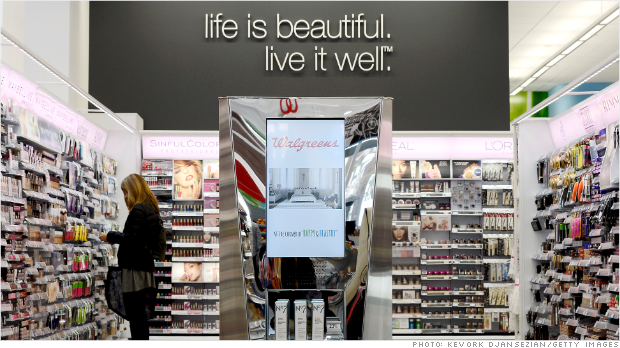
Walgreens prices vary as much as 55% at some stores, study finds

walgreens prices

The same item can cost as much as 55% more depending on which Walgreens location you choose, a new study found.

NEW YORK (CNNMoney)
Shop at the wrong Walgreens and you could end up paying significantly more than if you'd bought the exact same items at a store on the other side of town, a recent study found.

While some price variation occurs at Rite Aid (RAD, Fortune 500) and CVS (CVS, Fortune 500), Walgreens (WAG, Fortune 500) was the worst offender, with a single item costing as much as 55% more depending on a store's location, according to a study of 485 drugstore locations in New York, Los Angeles, Orange County, Calif., and Dallas-Forth Worth by the National Consumers League and labor union coalition Change to Win.

The study was based on the listed prices for a basket of 25 items, ranging from Tropicana Pure Premium orange juice to Huggies "Little Movers" diapers. Depending on the city, the chain was up to five times more likely to have store locations in the same market that charged different prices.

"It's a wake-up call I think for consumers," said Sally Greenberg, executive director of the National Consumers League "The expectation is that you're going to have the same prices within a chain."

In Dallas-Fort Worth, for example, Walgreens shoppers could pay $3 more for Folgers coffee depending on the location they chose or $3.50 extra for cold medication.

In New York City, a box of 10 Claritin allergy tablets cost anywhere from $10.49 to $15.99 depending on the Walgreens store. The same bottle of eye drops, meanwhile, cost $9.99 at a location in Queens and $15.49 a subway ride away on 57th street in Manhattan.

The differences can add up. The basket of 25 items cost $38 -- or nearly 20% -- more at a Walgreens' flagship in N! ew York City than it typically cost at other nearby locations.

How Walgreens' acquisitions create value  
How Walgreens' acquisitions create value

Walgreens spokesman Jim Graham said in a statement that the store's prices reflect the company's cost of doing business in different neighborhoods.

"Costs can vary from one location to another, even when they are a few blocks apart in dense urban areas, based on the store's cost of real estate, its hours of operation including whether it is open 24 hours, labor costs and the number of customers it serves each day, among other factors," he said.

Price ranges of at least 20% were found among products at CVS stores, but such large price disparities were much less frequent than at Walgreens. At Rite Aid, "virtually no products" had that large of a price difference, according to the study.

CVS said that prices may vary at different stores based on local competition and other operational factors. Rite Aid did not respond to requests for comment.

To conduct the study, researchers checked prices at Walgreens, CVS and Rite Aid stores in New York City, Los Angeles and Orange County and Walgreens and CVS stores in Dallas-Fort Worth. There are no Rite Aid stores in Dallas-Fort Worth.

Want to find the store with the best prices? Follow these tips from the National Consumers League.

Ask about price matching: While they won't be able to match online prices, managers are often able to match prices from other store locations of the same chain.

Shop around: Keep track of prices of your drugstore staples at different chains and locations. To top of page

Wednesday, September 11, 2013

Walk the Rocky Road to Profits

Print FriendlyWhile the market is hung up on what will happen in the Middle East and when the Federal Reserve will back off its loose monetary policy, many small companies are still growing earnings at significant rates.

One such company is a small footwear and apparel company that is discovering new product channels as a way to increase sales. Rocky Brands (NASDAQ: RCKY) has the highest earnings per share (EPS) growth rate in the footwear industry. The company just posted EPS growth of 700 percent in its recent quarter.

Nonetheless, the stock is undervalued and trades at a price-to-earnings (P/E) ratio of only 11. Due to strong sales, EPS growth and cheap valuation, Rocky Brands has 50 percent price appreciation potential in the next year.

Rocky Brands is a leading designer, manufacturer and marketer of premium quality footwear and apparel marketed under a portfolio of well-recognized brand names including Rocky, Georgia Boot, Durango, Lehigh, and the licensed brand Michelin Footwear.

For the second quarter of 2013, net sales increased 33.8 percent to $59.4 million versus net sales of $44.4 million for the second quarter of 2012. Net income increased 700 percent to $1.8 million, or $0.24 in EPS, for the second quarter of 2013, versus net income of $0.2 million, or $0.03 in EPS, for the second quarter of 2012.

For the first six months of 2013, net sales increased 15.8 percent to $113.1 million versus net sales of $97.7 million in the first half of 2012. Net income increased 170 percent to $2.7 million, or $0.35 in EPS, for the first half of 2013, versus net income of $0.9 million, or $0.13 in EPS, for the first half of 2012.

The second quarter marked the third consecutive quarter of positive sales growth for the retail division. The company continues to make important progress transitioning the majority of its Lehigh business-to-business (B2B) operations to the Internet.

Orders on the comp! any’s websites were up 65 percent from Q2 last year and are expected to see similar trends over the next couple of quarters. Currently, 78 percent of all B2B sales for the company are through web or catalog versus 65 percent for the same period a year ago.

The company has increased productivity in the direct to consumer eCommerce channel by investing in more resources to drive traffic to its Rocky, Georgia and Durango websites. It also added features such as product videos and enhanced search functionality to improve the consumer experience and increase conversion rates.

Rocky Brands is a small cap stock with a market cap of only $118 million. However, the current enterprise value of the stock is $147 million, meaning the stock trades at 80 percent of this value. The stock is considerably undervalued, as it trades at a P/E of 11 and has a current price-to-sales ratio of 0.5. Both of these valuation metrics for Rocky Brands places the stock in the 40th percentile within the apparel goods industry. Additionally, the stock trades at 0.94 of its current book value.

Rocky Brands pays a quarterly dividend of $0.10 for an annual dividend yield of 2.53 percent. There is significant room for increasing dividends, because the payout ratio is only 7 percent.

The stock is up 36 percent in the past year. Rocky Brands has sold off in the past week, so now may be a great time to start to build a position in the stock.

Zacks Investment Research has an outperform rating on the stock. Also, the stock has a Fidelity equity summary score of 8.4 out of 10 for a Bullish outlook.

Rocky Brands expects to hit EPS of $1.42 in 2013, with EPS projected to increase 15.5 percent to $1.64 in 2014. Based on a conservative P/E of 15, Rocky Brands has a 12-month price target of $24.60, an increase of 50 percent from the current stock price.

Greg Pugh, an income-investing expert, publishes a newsletter called Investing for Monthly Income.

Tuesday, September 10, 2013

Will Lockheed Martin Dominate the Competition?

With shares of Lockheed Martin (NYSE:LMT) trading around $107, is the company an OUTPERFORM, WAIT AND SEE, or STAY AWAY? Let's analyze the stock with the relevant sections of our CHEAT SHEET investing framework:

T = Trends for a Stock’s Movement

Lockheed Martin is a global security and aerospace company principally engaged in the research, design, development, manufacture, integration, and sustainment of technology systems and products. The company also provides a range of management, engineering, technical, scientific, logistic, and information services. It serves both domestic and international customers with products and services that have defense, civil, and commercial applications, with its principal customers being agencies of the U.S. government. It operates in five business segments: Aeronautics, Information Systems & Global Solutions, Missiles and Fire Control, Mission Systems and Training, and Space Systems. As a leading provider of global security and aerospace technology to the U.S. government, Lockheed Martin stands to see steady profits for many years. Defense products and services continue to be of great importance to the United States and a great source of revenue for Lockheed Martin.

T = Technicals on the Stock Chart are Strong

Lockheed Martin stock has experienced a bullish run extending back several years. Currently, the stock has broken-out to three-year highs and looks to be getting ready to test previous all-time high prices. Analyzing the price trend and its strength can be done using key simple moving averages. What are the key moving averages? The 50-day (pink), 100-day (blue), and 200-day (yellow) simple moving averages. As seen in the daily price chart below, Lockheed Martin is trading above its rising key averages, which signals neutral to bullish price action in the near-term.

NEW! Discover a new stock idea each week for less than the cost of 1 trade. CLICK HERE for your Weekly Stock Cheat Sheets NOW!

LMT

(Source: Thinkorswim)

Taking a look at the implied volatility (red) and implied volatility skew levels of Lockheed Martin options may help determine if investors are bullish, neutral, or bearish.

Implied Volatility (IV)

30-Day IV Percentile

90-Day IV Percentile

Lockheed Martin Options

19.2%

70%

71%

What does this mean? This means that investors or traders are buying a very significant amount of call and put options contracts, as compared to the last 30 and 90 trading days.

Put IV Skew

Call IV Skew

June Options

Flat

Average

July Options

Flat

Average

As of today, there is an average demand from call buyers or sellers and low demand by put buyers or high demand by put sellers, all neutral to bullish over the next two months. To summarize, investors are buying a very significant amount of call and put option contracts and are leaning neutral to bullish over the next two months.

On the next page, let’s take a look at the earnings and revenue growth rates and the conclusion.

E = Earnings Are Mixed Quarter-Over-Quarter

Rising stock prices are often strongly correlated with rising earnings and revenue growth rates. Also, the last four quarterly earnings announcement reactions help gauge investor sentiment on Lockheed Martin’s stock. What do the last four quarterly earnings and revenue growth (Y-O-Y) figures for Lockheed Martin look like and more importantly, how did the markets like these numbers?

10 Best Safest Stocks To Buy Right Now

2013 Q1

2012 Q4

2012 Q3

2012 Q2

Earnings Growth (Y-O-Y)

14.78%

-16.97%

5.24%

11.22%

Revenue Growth (Y-O-Y)

-1.97%

-0.92%

-2.06%

3.27%

Earnings Reaction

1.26%

-2.93%

2.14%

1.01%

Lockheed Martin has seen increasing earnings and decreasing revenue figures over most of the last four quarters. From these figures, the markets have generally been pleased with Lockheed Martin’s recent earnings announcements.

P = Poor Relative Performance Versus Peers and Sector

How has Lockheed Martin stock done relative to its peers, Boeing (NYSE:BA), Northrop Grumman (NYSE:NOC), Raytheon (NYSE:RTN), and the sector?

Lockheed Martin

Boeing

Northrop Grumman

Raytheon

Sector

Year-to-Date Return

16.76%

32.87%

21.53%

17.77%

18.26%

Lockheed Martin has been a poor relative performer, year-to-date.

NEW! Discover a new stock idea each week for less than the cost of 1 trade. CLICK HERE for your Weekly Stock Cheat Sheets NOW!

Conclusion

Lockheed Martin provides valuable and essential security and aerospace technology to several companies and the U.S. government. The stock has been on a bullish run over the last few years and looks to be continuing higher and testing previous all-time high prices. Over the last four quarters, earnings have increased, while revenues have decreased, which has generally pleased investors in the stock. Relative to its peers and sector, Lockheed Martin has been a poor year-to-date performer. WAIT AND SEE what Lockheed Martin does this coming quarter.

Sunday, September 8, 2013

As War Risk Falters: Syria’s Economy by the Numbers

The United Kingdom has decided to refrain from an attack on Syria, although the United States may go it alone (or perhaps with France.) Obama has agreed to pass the decision to Congress which will debate the matter no earlier than September 9. And in Congress, Obama could lose his chance to punish Syria for its use of gas which killed over 1,400 people, altogether.  A limited military action, if approved,   could blunt the use of these chemical weapons. However, it could add to the violence and instability in the entire region. Whether or not Syria's government is affected, its economy is bound to worsen, probably faster than the turmoil so far has caused already.

From the standpoint of these economic consequences, Syria's gross domestic product (GDP) and imports and exports will have no effect on the economy in the rest of the world. It is too small.

On the basis of nominal GDP, Syria ranks 63rd among all countries, according to the International Monetary Fund (IMF). The nation's GDP last year was a mere $74 billion, making it smaller on that basis than Ecuador and Morocco. The country's population is just above 22 million. Syria has walled off access to its data, as far as the IMF is concerned, which means little can be determined about how badly it has been damaged recently. The IMF reported on August 2:

On July 26, 2013 the Executive Board of the International Monetary Fund (IMF) was informed that there could not be a briefing to the Board with an assessment of economic developments and policies in Syria, whose Article IV consultation is delayed by 26 months, due to a lack of adequate information that would allow staff to make such an assessment.

The World Bank has had slightly more success, as it reported in April:

The impact of the crisis on the economy is significant, which may, according to unconfirmed estimates have contracted 3 percent in 2011 and about 20 percent in 2012. Most affected by the conflict, as well as by the subsequent international sanctions, were tourism, retail trade, transportation, communications, mining and manufacturing.

The agency added:

Declining oil revenue following the imposition of sanctions on Syrian oil imports by the European Union as well as a significant economic contraction is also putting government finances under pressure. Latest data released by the International Energy Agency shows that oil output was consistently below 200,000 barrels per day (bpd) in 2012, compared to 400,000 bpd in 2009.

Even if the government can support itself by using money from falling sales of oil, the general population does not have any similar recourse to counter the effects of those things that erode consumer spending.

The CIA Facebook confirms not only the trouble with the Syrian economy, it also cements the nation as a third-world one that will not emerge from that status under current circumstances. The CIA evaluation also confirms how little Syrian GDP matters to the rest of the world.

Despite modest economic growth and reform prior to the outbreak of unrest, Syria's economy continues to suffer the effects of the ongoing conflict that began in 2011. The economy further contracted in 2012 because of international sanctions and reduced domestic consumption and production, and inflation has risen sharply. The government has struggled to address the effects of economic decline, which include dwindling foreign exchange reserves, rising budget and trade deficits, and the decreasing value of the Syrian pound. Prior to the unrest, Damascus began liberalizing economic policies, including cutting lending interest rates, opening private banks, consolidating multiple exchange rates, raising prices on some subsidized items, and establishing the Damascus Stock Exchange. The economy remains highly regulated by the government. Long-run economic constraints include foreign trade barriers, declining oil production, high unemployment, rising budget deficits, and increasing pressure on water supplies caused by heavy use in agriculture, rapid population growth, industrial expansion, and water pollution.

In sum, it is small, troubled and getting worse.

Thursday, September 5, 2013

Is General Motors Enticing At Current Prices?

With shares of General Motors (NYSE:GM) trading around $35, is GM an OUTPERFORM, WAIT AND SEE, or STAY AWAY? Let's analyze the stock with the relevant sections of our CHEAT SHEET investing framework:

T = Trends for a Stock’s Movement

General Motors designs, manufactures, and markets cars, crossovers, trucks, and automobile parts worldwide. The company markets its vehicles primarily under the Buick, Cadillac, Chevrolet, GMC, Opel, Holden, and Vauxhall brand names, as well as under the Alpheon, Jiefang, Baojun, and Wuling brand names. It further sells cars and trucks to dealers for consumer retail sales as well as to fleet customers, including daily rental car companies, commercial fleet customers, leasing companies, and governments.

Recently, Fitch Ratings, a global rating agency that analyzes value through credit opinions, research, and data, announced that it had upgraded General Motors to a positive outlook from stable, illuminating the Detroit automaker's continued turnaround. General Motors's Chevrolet division is raising its sales target to 5 million vehicles for 2013 — a goal that, if realized, would mark a record for the U.S. automaker, but one that the company is confident it can reach thanks to growth in its developing markets.

T = Technicals on the Stock Chart Are Mixed

General Motors stock has been moving higher in the last few years. The stock is pulling back from highs for the year so it may need time before its next move. Analyzing the price trend and its strength can be done using key simple moving averages. What are the key moving averages? The 50-day (pink), 100-day (blue), and 200-day (yellow) simple moving averages. As seen in the daily price chart below, General Motors is trading between its key averages which signal neutral price action in the near-term.

GM

(Source: Thinkorswim)

Taking a look at the implied volatility (red) and implied volatility skew levels of General Motors options may help determine if investors are bullish, neutral, or bearish.

Implied Volatility (IV)

30-Day IV Percentile

90-Day IV Percentile

General Motors Options

29.38%

76%

75%

What does this mean? This means that investors or traders are buying a very significant amount of call and put options contracts as compared to the last 30 and 90 trading days.

Put IV Skew

Call IV Skew

September Options

Flat

Average

October Options

Flat

Average

As of today, there is an average demand from call buyers or sellers and low demand by put buyers or high demand by put sellers, all neutral to bullish over the next two months. To summarize, investors are buying a very significant amount of call and put option contracts and are leaning neutral to bullish over the next two months.

On the next page, let’s take a look at the earnings and revenue growth rates and the conclusion.

E = Earnings Are Mixed Quarter-Over-Quarter

Rising stock prices are often strongly correlated with rising earnings and revenue growth rates. Also, the last four quarterly earnings announcement reactions help gauge investor sentiment on General Motors’s stock. What do the last four quarterly earnings and revenue growth (Y-O-Y) figures for General Motors look like and more importantly, how did the markets like these numbers?

2013 Q2

2013 Q1

2012 Q4

2012 Q3

Earnings Growth (Y-O-Y)

-16.67%

-3.33%

6.49%

-13.59%

Revenue Growth (Y-O-Y)

3.88%

-2.32%

3.47%

2.33%

Earnings Reaction

-1.10%

3.01%

0.03%

0.70%

General Motors has seen decreasing earnings and rising revenue figures over the last four quarters. From these numbers, the markets have been pleased with General Motors’s recent earnings announcements.

P = Weak Relative Performance Versus Peers and Sector

How has General Motors stock done relative to its peers Ford Motor (NYSE:F), Toyota Motor (NYSE:TM), Tesla Motor (NASDAQ:TSLA), and sector?

General Motors

Ford Motor

Toyota Motor

Tesla Motor

Sector

Year-to-Date Return

21.64%

30.12%

34.64%

390.10%

29.56%

General Motors has been a poor relative performer, year-to-date.

Conclusion

General Motors continues to change its business as it looks to entice companies and consumers with its new and improved vehicles. The company recently saw an upgrade from Fitch that has boosted the stock. The stock is now trading slightly below highs for the year. Over the last four quarters, earnings have been decreasing while revenues have been rising, which has pleased investors in the company. Relative to its peers and sector, General Motors has been a weak year-to-date performer. WAIT AND SEE what General Motors does this coming quarter.

Tuesday, September 3, 2013

JPMorgan Top Stock Picker with Equities Out of Lockstep

Mike McGregor/Bloomberg Markets
Howard Chen, left, and Craig Siegenthaler correctly predicted that AllianceBernstein stock would rebound.

Investors had declared the stock of AllianceBernstein Holding LP (AB) a loser. From Jan. 1, 2010, to Aug. 23, 2012, it had declined 43 percent compared with a 33 percent gain for the Standard & Poor's 500 Index. Nevertheless, on that day, Credit Suisse Group AG analyst Craig Siegenthaler lifted his rating on the New York-based money manager's shares to a buy.

"Many investors had left it for dead," Siegenthaler says. "It was a tough stock to even bring up in front of investors. Underneath the low valuation, the company was really in a transformational period."

Since his call, AllianceBernstein's shares have outperformed the S&P 500 by almost threefold, with the stock returning 73 percent for the year ended on Aug. 14. In recommending the shares to Credit Suisse customers, Siegenthaler said that the company was cutting expenses and that fixed-income sales were improving, Bloomberg Markets magazine will report in its September issue.

More from the September issue of Bloomberg Markets:

SPECIAL REPORT: Terrorism and Tungsten | Slideshow FAMILY OFFICES: World's Richest | Graphic QATAR: Money, Gas and Clout PHILANTHROPY: One Woman's Mission BILLIONAIRES: Charity, Russian Style | Slideshow MALAYSIA: Najib's Grand Plan

Siegenthaler's calls on stocks such as AllianceBernstein helped make him and his Credit Suisse partner, Howard Chen, the top U.S. analysts of brokerage and asset management firms in 2012, according to a ranking of stock analysts by consulting firm Greenwich Associates and Bloomberg Markets.

He currently has buy recommendations on private-equity firm Fortress Investment Group LLC (FIG) and Zions Bancorporation. (ZION)

Analysts Surveyed

To compile the ranking, Stamford, Connecticut-based Greenwich Associates surveyed 945 buy-side analysts at 190 investment management firms, mutual funds, hedge funds, pension funds and insurers from December to March. The analysts were asked to name the Wall Street research teams they considered their most important sources of advice on investments.

JPMorgan Chase & Co. (JPM)'s research unit, under Noelle Grainger, the bank's head of equity research in the Americas, scored the largest number of highly ranked analysts, making it the No. 1 firm in U.S. equities research for the fourth consecutive year, according to Greenwich Associates. Bank of America Corp.'s BofA Merrill Lynch Global Research unit was No. 2, followed by Morgan Stanley. (MS)

Research directors and analysts say the big news in their field is that the era of correlation -- when stocks move up or down in unison in reaction to macroeconomic events -- is finally ending. Weakening correlation signals that investors are less obsessed with big issues like Europe's debt crisis, the U.S. fiscal deficit and China's growth trajectory. They're looking instead at more stock-specific investment drivers such as earnings, technology innovations and market share, Grainger says.

Adding Value

"In 2012, people started to be willing to put a little more risk on the table," Grainger says. "It was a year where analysts could add more value based on their industry and company expertise."

It was also a year in which the tide lifted a lot of boats. More tha! n 300 of the stocks in the S&P 500 index saw returns in excess of 10 percent in 2012, including reinvested dividends. As the index surged, driven by four straight years of profit growth and three rounds of Federal Reserve stimulus, companies' stocks began to break away from the pack and move up or down on their merits.

"From the stock pickers' side, two things stuck out in the past year," says Brett Hodess, the head of Americas equity research at BofA Merrill Lynch. "It was still very important to look at macro events in order to see which sectors would be most favored. Then you had to figure out who the winners and losers would be. That was the way to outperform."

Calculating Correlation

The correlation among S&P 500 companies fell to an average of 0.59 last year, according to data compiled by Westport, Connecticut-based research firm Birinyi Associates Inc. A reading of 1.0 indicates they're all moving in the same direction by the same amount. In 2011, stocks had moved in unison by the most since at least 1980, reaching a record correlation of 0.86 in October as prices tumbled, according to Birinyi.

Heather Bellini, a software analyst at Goldman Sachs Group Inc. (GS) who ranked second in her industry, started coverage of Salesforce.com (CRM) Inc. in July 2011, putting the largest maker of customer-management software on Goldman's buy list. She saw cash flow rising on the continued success of Salesforce's Sales Cloud -- its core product -- as well as newer offerings such as the Service Cloud customer-support software. The shares fell after her July 12, 2011, buy recommendation and then gained 66 percent in 2012. The stock is up 6.3 perpercent this year as Aug. 14.

Bellini now has buy recommendations on Facebook Inc. (FB) and Oracle Corp. (ORCL)

Reassessing Private Equity

Credit Suisse (CSGN)'s Chen took a new look at publicly listed private-equity firms, including Apollo Global Management LLC, Blackstone Group LP (BX) and Carlyle Gro! up LP. (C! G) Investors are still struggling to properly value them, he says.

Private-equity firms lock up investor money for as long as a decade while they buy companies, overhaul them and, if all goes well, sell them for a profit. The firms, which use debt to finance the deals, typically charge an annual management fee of 1.5 percent to 2 percent and keep 20 percent of profits from investments.

Valuing the firms had traditionally consisted of a sum-of-the-parts analysis -- marking the value of investments every quarter, according to Chen. He argued in a February 2012 report to change that metric and judge the firms based on their longer-term cash earnings generated from management fees and profits from investments.

'False Precision'

"To me, sum of the parts has a false sense of precision," Chen says. "It doesn't get to the heart of how these companies create value and why they've been so successful."

Apollo and Blackstone were the best positioned in 2012 to deliver the biggest growth in cash earnings, Chen says. He maintained his buy calls on both firms throughout the year. From Chen's Feb. 7, 2012, note calling for a new valuation methodology, Apollo returned 129 percent as of yesterday's close and Blackstone, 46.6 percent.

Chen today has buy recommendations on IntercontinentalExchange Inc. (ICE) and asset manager State Street Corp. (STT)

Top Biotech Companies To Invest In 2014

The top analyst of large-cap banks in the Greenwich Associates/Bloomberg Markets ranking is Betsy Graseck of Morgan Stanley. In one of her best calls, she saw bad news for JPMorgan as good news for investors.

'Double Down'

On May 18, 2012, eight days after the biggest U.S. bank by assets announced a $2 billion trading loss in the firm's London chief investment office, Graseck published a note telling investors to "double down" on the shares, which had plun! ged 27 pe! rcent from their March 2012 peak. The trading losses were attributed to Bruno Iksil, known in the market as the London Whale, and ultimately totaled at least $6.2 billion.

"We pounded the table post-Whale," Graseck says. "The view was that management had the skills to be able to work with the Street and get the portfolio risks reduced." JPMorgan stock returned 67.6 percent from her May report to yesterday's close.

Another Graseck winner was Atlanta-based SunTrust Banks (STI) Inc., which she upgraded to a buy on July 2, 2012, after digging into data that showed a recovery in the housing market in the Southeastern U.S. SunTrust is the biggest lender in Georgia and has branches in Florida, Maryland and North Carolina. She also saw that SunTrust would benefit from a new wave of refinancing following the extension of the federal Home Affordable Refinance Program, which allows Americans with little home equity to refinance. Shares of SunTrust rallied 42.9 percent from her call to Aug. 14.

Trade Routes

Graseck's Morgan Stanley colleague Bill Greene ranks No. 1 in transportation. One of his best calls was a sell in March 2010 on Expeditors International (EXPD) of Washington Inc., which assists companies in shipping goods across international borders. Most of Expeditors' business is on trade routes across the Pacific Ocean, especially between China and the U.S. Greene predicted that the company's growth would stumble as freight flows shifted to emerging markets -- between China and Vietnam, for example. In addition, companies were increasingly near-shoring, or relocating factories and offices closer to headquarters, resulting in fewer international shipments.

"All of these factors were head winds to growth," Greene says.

Starting in the fourth quarter of 2011, Expeditors' profits missed analysts' estimates for six straight quarters, sending shares down 2 percent in 2012. They've returned 3.2 percent this year as of yesterday.

One-by-One

! While jud! ging stocks one by one has become easier, what hasn't changed since the financial crisis is investors' demand for research on global investment themes. Analysts now collaborate across industries and regions in order to produce comprehensive reports that identify worldwide trends.

"Companies are competing across traditional lines," Goldman software analyst Bellini says. "One thing that's important for us is to make sure we break down the silos that are set up due to the way the industries are covered. This lets us present portfolio managers with research that's more unified and consistent."

Bellini teamed up with William Shope Jr., Goldman's technology hardware analyst, who's tied for third in his group in the Greenwich Associates/Bloomberg Markets survey, and Michael Bang, a Seoul-based analyst at the firm, on a December report that noted how Apple Inc. (AAPL), Samsung Electronics Co. (005930) and Facebook would all benefit from changing trends in how consumers use smartphones and tablets.

Defying the Crisis

Stephen Penwell, Morgan Stanley's director of North American equity research, says his firm did a report that featured companies whose profit margins had risen even as global economic events such as the European debt crisis had intensified. They included discount chain Dollar General Corp. (DG), Dunkin' Brands Group Inc. (DNKN) and Web services firm Rackspace Hosting Inc. (RAX)

"Good old-fashioned stock picking is coming back in vogue," Penwell says. "Clients are beginning to make more bets and bigger bets."

If investors are looking to make a big bet on AllianceBernstein, Craig Siegenthaler says they're late to the party. On July 3, he concluded the shares would no longer outperform relative to other asset managers and downgraded them to a hold.

How We Crunched the Numbers

To create rankings of the top U.S. analysts by industry, Bloomberg Rankings worked with Greenwich Associates, a consultant to financial services f! irms. Fro! m December through March, Greenwich Associates interviewed buy-side analysts who use Wall Street research, asking each respondent to list the 10 firms they regarded as the most important sources of information on the industries they cover.

About 60 percent of these discussions were in person; the balance were conducted online. Greenwich Associates interviewed a total of 945 analysts at 190 institutions, including banks, insurance companies, investment management firms, mutual funds, pension funds and hedge funds.

These accounts represent an estimated total of $4.7 billion in commissions, or an average of almost $30 million in commissions per buy-side institution. Participating institutions were placed in seven tiers based on the commissions they generated. The responses of top-tier accounts received the greatest weight.

Greenwich Associates received responses for 58 industries, and we included in the ranking the 34 industries that had at least 45 responses. For the final ranking, Bloomberg Markets researched and added the names of the sell-side analyst or analysts with prime responsibility for tracking each industry.

Commission Weighted

Greenwich Associates listed as many as five winning firms for some industries and as few as two for others. The number of firms selected was a function of their commission-weighted share of the institutional vote. Statistical ties occurred when the difference between weighted shares was small. When the difference between the second- and third-ranked firms was substantial, no No. 3 firm was named.